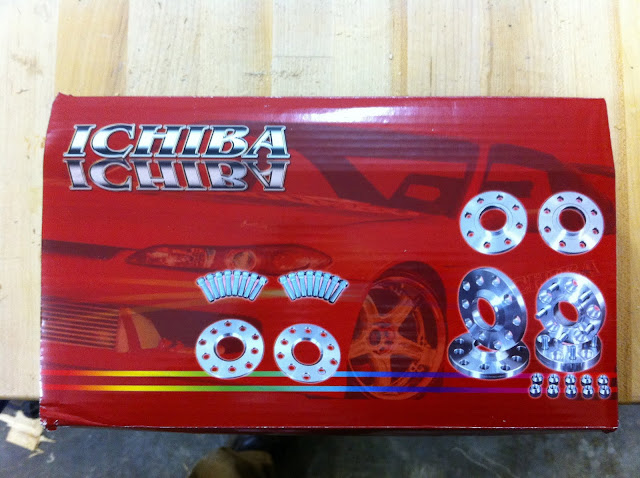
I installed 25mm Ichiba V2 bolt-on spacers today as an experiment to see what would happen to handling, mileage, tramlining, rubbing, etc. Before buying the spacers, I put the car on the lift and did some careful measuring and to my surprise, 25mm spacers looked like they would fit. After hearing horror stories of spacers being dangerous, etc. I figured I'd buy the best I could get and read a lot of good things about Ichiba's (and also H&R) so that's what I bought.
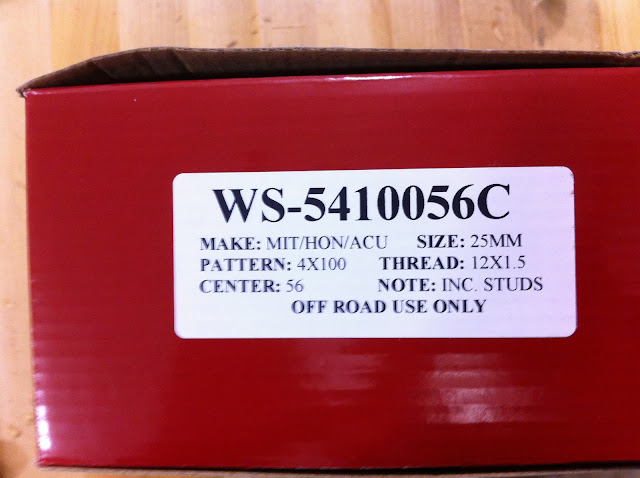
Here are the specs I ordered:
4x100mm bolt pattern
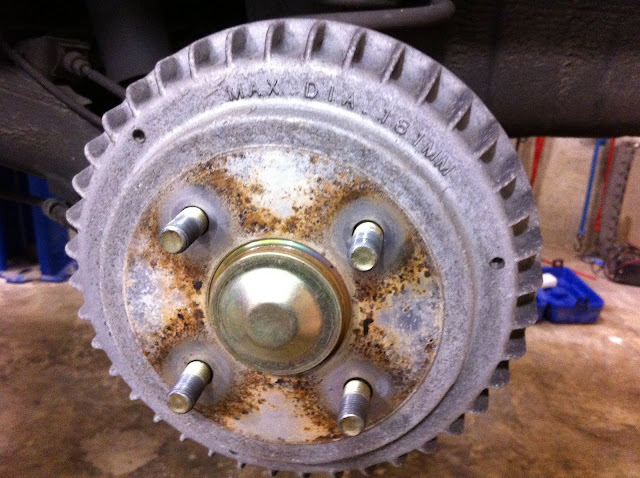
56mm center bore (fits really nicely to both the brake drum and the wheel)
25mm width
bolts are 12mm w/1.5 pitch
That "off-road use only" disclaimer caught my attention. I'm going to trust the materials and my torque wrench and not worry about this bit.
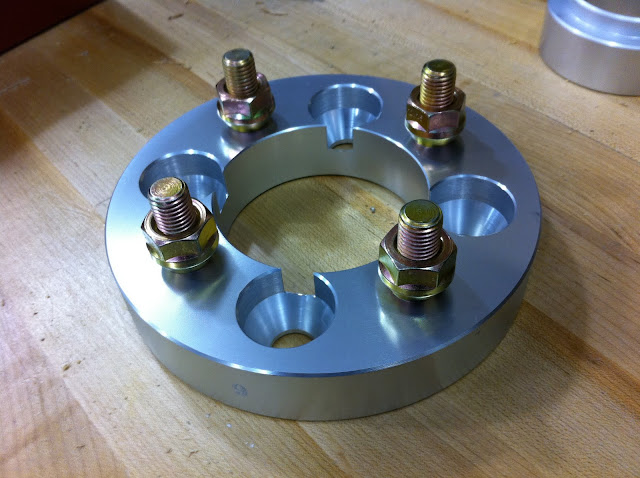
This is how the spacer looks unboxed. It comes with studs and nuts. At 25mm thick, the stock studs and the included lugnuts are completely countersunk. This is a good thing because the Insight's wheels have no recesses on the back side to accomodate protruding studs (thinner bolt-on spacers require this of your wheels)
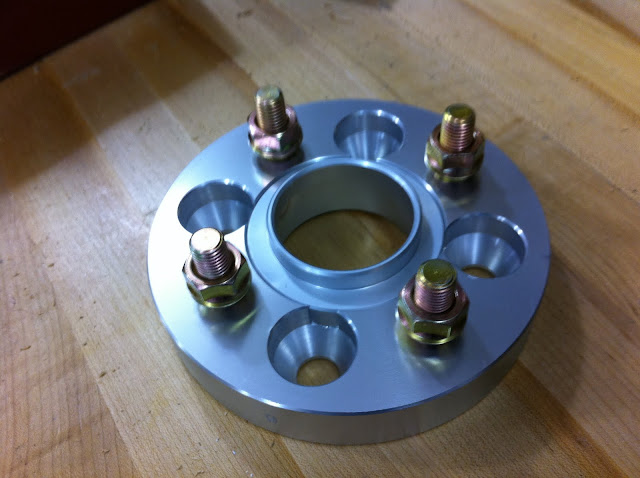
Here's the spacer with the hub-centric insert installed:
Disclaimer: I'm much more interested in the mechanicals of cars than how clean they are. My Insight hasn't been washed in many months, maybe years. Sorry.
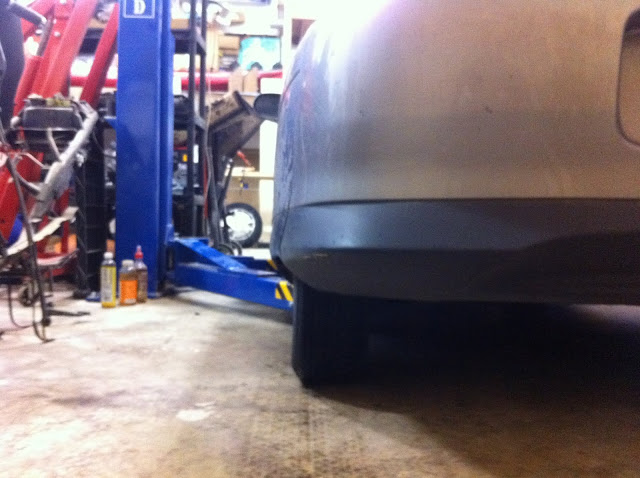
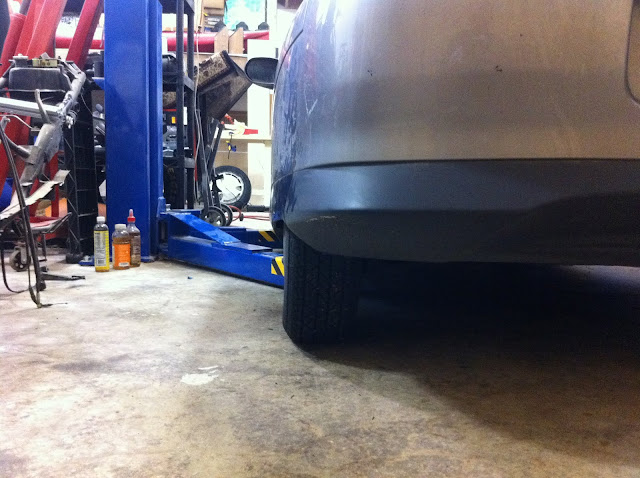
Here is the stance before:
(before)
(before)
Here is the stance after:
(after)
(after)
I only had time for a short but pretty comprehensive (e.g. bumpy, hilly & curvy) test drive in the rain tonight but so far, no rubbing at all and I didn't trim a thing from the fender skirts. If you want to install 185/60-14's, you'd probably want to go with a smaller spacer--they're a close fit w/the stock 165/65-14's but that's all I currently care about. Handling wise, it's hard to say but I WANT there to be a big difference so I'm hesitant to say what the big changes, if any, are without more of a test drive. When I get some more miles on the setup including rutted I-90 concrete, which tossed the car around a lot when stock, I'll report back.
(before - wheel to fender skirt gap -- all the way to my knuckle)
(after - wheel to fender skirt gap -- about an inch less)
PRO TIP: a 15 month old child strapped to your chest CAN sleep through the sound of an impact wrench
Does anyone have an opinion about what might happen to the rear wheel bearings when the load is displaced 25 mm. out from stock? The rear is pretty light, so maybe the bearings will do just fine. When I was young, I installed wide wheels on a Chevrolet. The additional width was all toward the outside; i.e., the additional width wasn't distributed equally, so the wheel load was displaced to the outside. The outside front wheel bearings wore out. This might have been coincidental.
__________________
Aloha,
Art Isbell
2000 Insight A/C #559
Genesis One MIMA+FAS and grid charger, OBDIIC&C, Rostra, Fumoto, DEFA engine block heater, Philips LED DRL's, Honda security system
Currently, one of my projects involves adding drive sprocket adapters on the inside of the rear wheels for rear wheel belt drive. I had planned on about a one inch offset which is what you have. My main concern has been with the clearance at the REAR of the skirt and the wheel because the shape of the body narrows back there.
It is encouraging to see that there appears to be adequate clearance. I will be following your progress and comments with great interest and hope you will continue to report success.
Let us know how it goes though. Very intrigued. I don't imagine this should impact MPG at all, so if it increases handling performance it may be worth it.
__________________
Bumblebee Batteries, LLC - Helping your hybrid get from point A to point Bee!
Let us know how it goes though. Very intrigued. I don't imagine this should impact MPG at all, so if it increases handling performance it may be worth it.
lol, I'm jealous too!
I would think it is possible to increase mileage because now you can cover more underbody area, and tighter tolerances always give better aerodynamics
Does anyone have an opinion about what might happen to the rear wheel bearings when the load is displaced 25 mm. out from stock? The rear is pretty light, so maybe the bearings will do just fine. When I was young, I installed wide wheels on a Chevrolet. The additional width was all toward the outside; i.e., the additional width wasn't distributed equally, so the wheel load was displaced to the outside. The outside front wheel bearings wore out. This might have been coincidental.
This is a very real problem with wheel adapters and is mostly not considered or is just ignored. Front wheel spacers really goof up the front end geometry and even careful re-alignment is never very satisfactory. With the torsion rear beam suspension used on the Insight, this may not be a problem as far as the geometry is concerned.
The cantilevering of the load on the bearings that Art suggests probably will effect bearing life. The "correct" way to work around that bearing wear issue might be to install appropriate spacers between the mounting surfaces of the axle beam and the brake backing plate/wheel spindle instead of between the brake drum and wheel. This is a more complex and seldom used method but should deal with the bearing wear Art brings up but may create some other problems such as those with the lengths and locations of brake lines, etc..
Considering the trade-offs, the wheel adapters may not be the worse choice on a rear axle setup.
The AutoGuide.com network consists of the largest network of enthusiast-owned enthusiast-operated automotive communities.
AutoGuide.com provides the latest car reviews, auto show coverage, new car prices, and automotive news. The AutoGuide network operates more than 100 automotive forums where our users consult peers for shopping information and advice, and share opinions as a community.